UO Campus Safety Dispatch
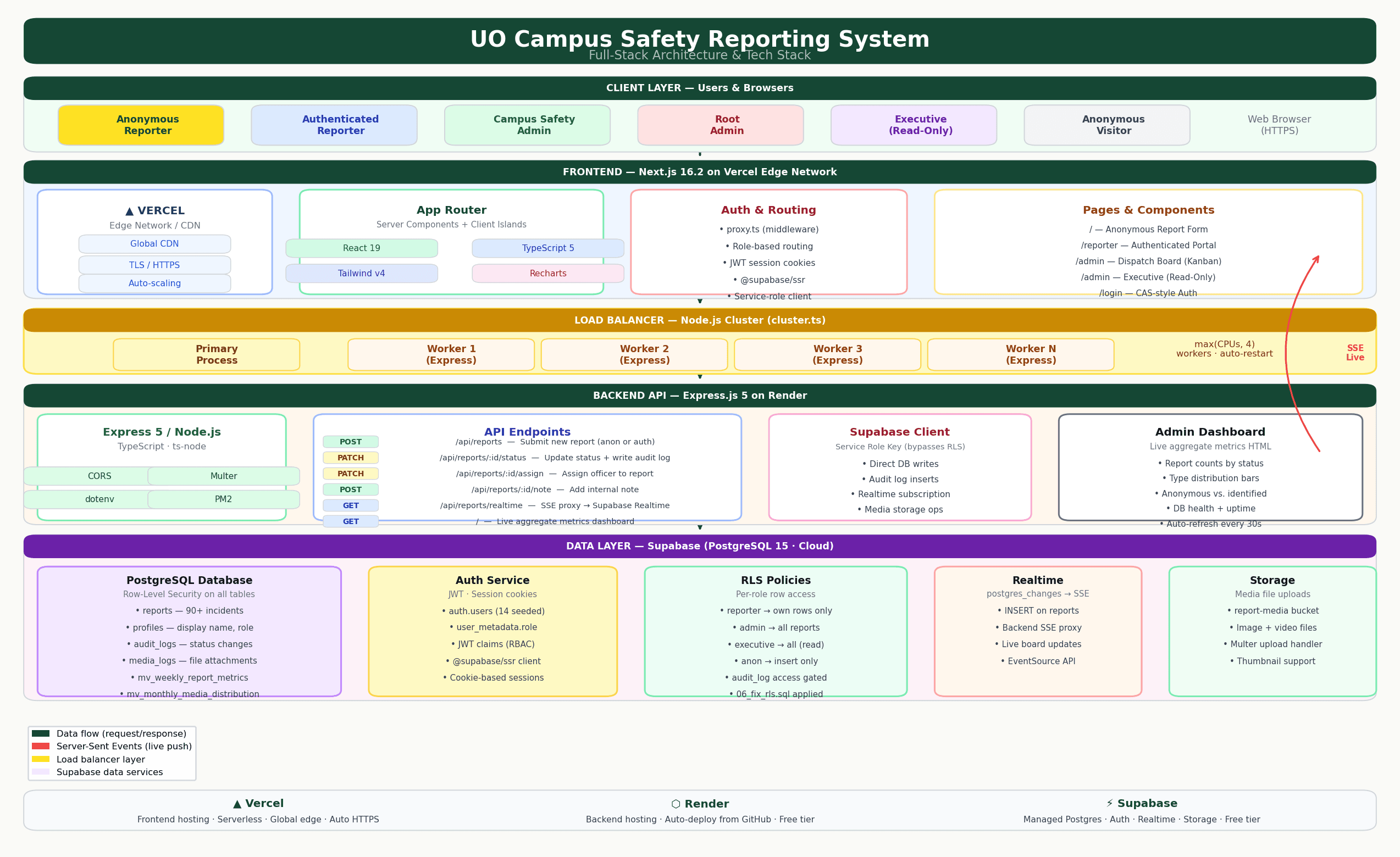
A full-stack incident reporting and dispatch platform — anonymous public submission, a real-time kanban dispatch board for safety staff, and a read-only executive overlay — built on Next.js, Express, and Supabase.
Overview
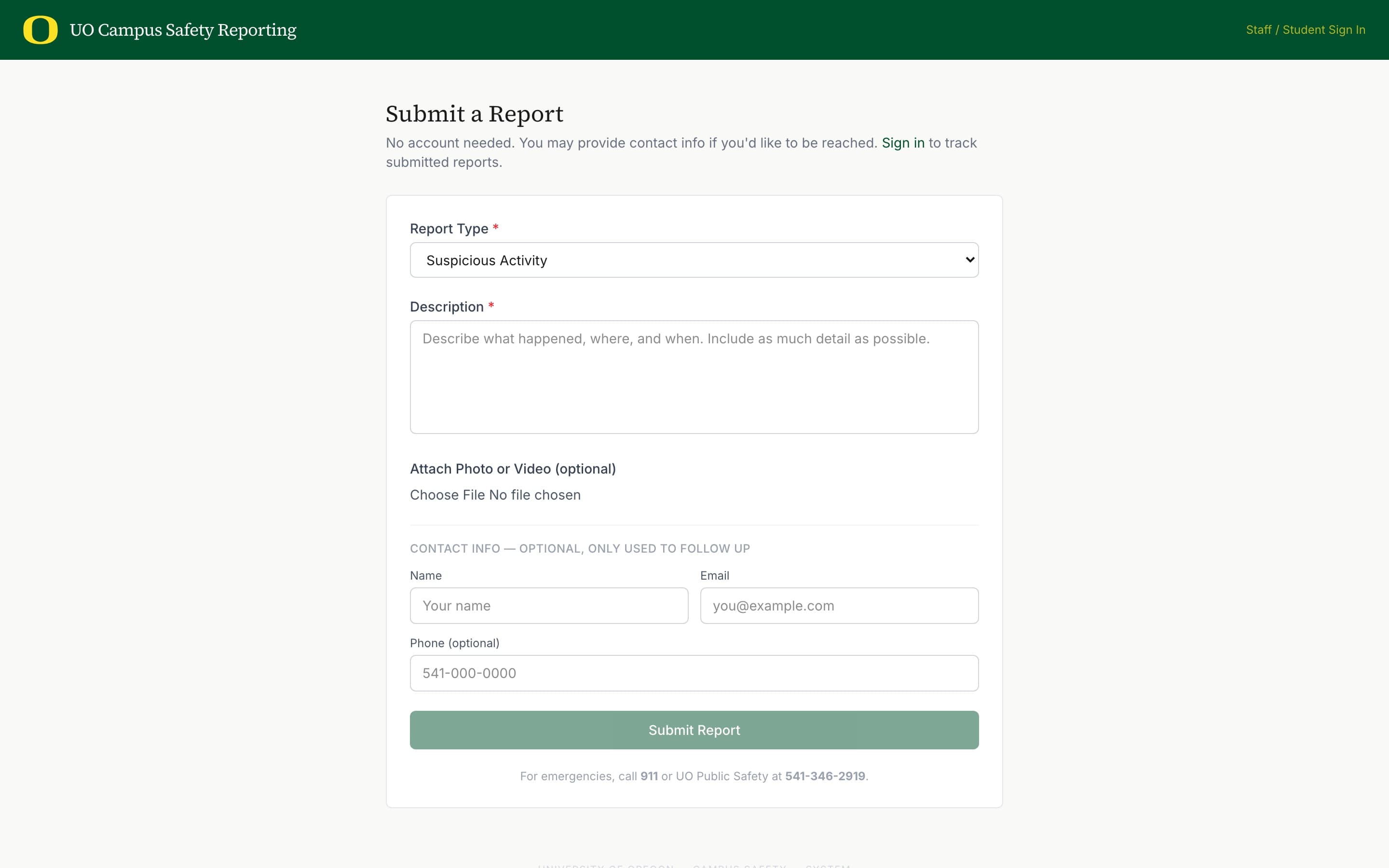
An internal reporting and dispatch platform for University of Oregon Campus Safety, serving
three audiences from one codebase: the public submits incidents anonymously at /, safety
staff triage them on a real-time dispatch board at /admin, and executives get a read-only
analytics overlay on the same board. The design mirrors professional CAD/dispatch tools while
keeping UO's visual identity.
Approach
- Kanban dispatch board — Pending → Under Review → Closed, cards sorted by priority tier then age, with search, multi-select priority/tag filters, and an officer roster strip.
- Automatic priority + tags — P1–P4 and tags (
MEDICAL,FIRE, …) derived from incident type; reports older than 30 minutes flag an animated OVERDUE badge. - Role-based access — anonymous / reporter / admin / executive, enforced in middleware and again with Postgres Row-Level Security; executives see the board but no PII or controls.
- Real-time — Supabase Realtime → Express SSE → browser
EventSource, so new reports appear without a refresh. - Infrastructure — a Node.js
clusterload balancer (up to 4 workers, auto-restart), PM2 for production, and materialized views for analytics queries.
Stack
Next.js 16 (App Router) + React 19 + Tailwind v4 on Vercel; Express 5 on Render; Supabase (PostgreSQL 15, Auth, Realtime, Storage); Recharts for the analytics overlay.